
THE ART OF LIFE: THE TRUE LUXURY OF LIVING INTENTIONALLY
A meaningful life does not have to be large, impressive, or endlessly expanding. Its deepest luxury may be the freedom to live authentically, choose deliberately, and make the life already in our hands feel fully inhabited.
EGW Luxury Magazine | The Art of Life by Columnist Monica Lofstrom
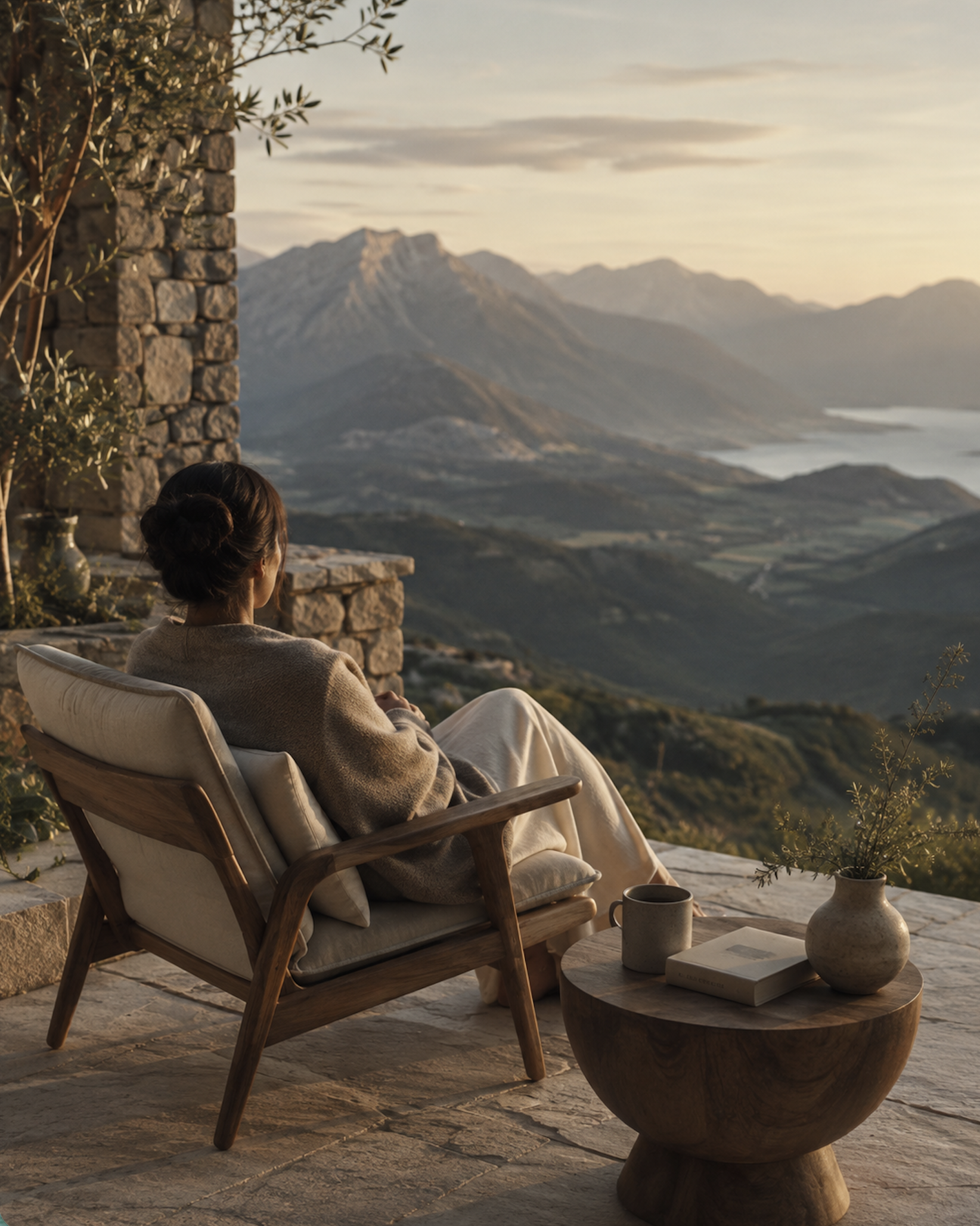
There is a version of luxury that has very little to do with abundance. It cannot be measured by the size of a home, the distance traveled, the number of accomplishments collected, or the visibility of a life from the outside. It is found instead in alignment: the rare experience of waking into a life that feels recognizably your own. To live intentionally is to stop allowing convention, comparison, and momentum to make every important decision on our behalf.
The best version of a life is not necessarily the biggest version of it. A quiet life can be extraordinary when it is shaped around meaningful work, people who are deeply loved, enough time to notice the day, and the freedom to be honest about what matters. A modest home can hold enormous beauty, an ordinary afternoon can become a treasured memory, and a life invisible to the wider world can still be rich beyond measure. The question is not whether a life looks impressive, but whether the person living it feels present inside it.
“The truest luxury is not having everything. It is knowing what matters enough to build your life around it.”
THE COURAGE TO CHOOSE YOUR OWN LIFE
Intentional living begins with discernment, but it also requires courage. Many of the choices that make a life more authentic are not the choices most easily understood by other people, because society offers remarkably persistent ideas about what progress is supposed to look like. More responsibility is assumed to be better than less, greater visibility better than privacy, a larger house better than a smaller one, a faster life better than a slower one, and continued expansion better than contentment. Yet a life built entirely around external measures of success can become strangely unfamiliar to the person at its center.
Authenticity asks different questions. Does this relationship allow honesty, tenderness, and room to grow? Does this work support a meaningful life, or has life become something that exists only around the work? Does the home offer shelter and belonging, or has it become another object to maintain and perform? Intentional choices are not always dramatic; often they are quiet acts of refusal, the decision not to pursue something simply because everyone else would consider it an advancement.
There is strength in choosing less when less creates more room for what matters. A smaller calendar can contain deeper friendships, a simpler home can hold greater peace, and a career with fewer accolades can offer more autonomy and meaning. Choosing a life that suits the person living it is not a retreat from ambition. It is an expansion of the definition of success itself.
ENOUGH IS A BEAUTIFUL WORD
Modern life is remarkably skilled at convincing us that satisfaction should always remain just beyond reach. There is another goal to achieve, another purchase to desire, another version of ourselves to improve, and another standard against which to measure what we already have. The result is that “more” becomes automatic while “enough” can begin to sound suspiciously like surrender. In reality, knowing what is enough may be one of the most sophisticated forms of self-knowledge.
Enough does not mean abandoning aspiration or refusing growth. It means understanding that growth has direction, and that not every direction is worth taking. A person can want to become wiser without wanting to become busier, more accomplished without becoming more publicly visible, more financially secure without allowing consumption to become the measure of a good life. Enough creates a boundary around what we value so that endless appetite does not quietly replace appreciation.
This is where intentionality becomes a form of luxury. To know that the room is beautiful enough, the dinner is good enough, the work is meaningful enough, and the day has contained enough is to step outside a culture built upon perpetual dissatisfaction. Contentment is not complacency when it is chosen consciously. It is the ability to recognize value before time turns it into memory.
THE BEAUTY OF A SMALL LIFE
There is something profoundly elegant about a life that does not need to prove its importance. It may consist of familiar streets, a few close friendships, meals made at home, meaningful work, books stacked beside a chair, a garden tended through the seasons, and evenings whose significance would be impossible to explain to anyone who was not there. Nothing about such a life is inherently small except by the measurements of a culture that mistakes visibility for value. From the inside, it may feel enormous.
The phrase “a small life” deserves reclamation because scale has little relationship to meaning. A person can travel the world and remain disconnected from themselves, while another can inhabit one place with extraordinary depth and curiosity. A life can contain fewer possessions and greater beauty, fewer acquaintances and more love, fewer obligations and more contribution. Meaning is not created by volume; it is created by attention.
This is not an argument for one particular way of living. A large public life can be deeply authentic, just as a quiet private one can become constricting when it is chosen from fear rather than truth. The distinction is intention: whether our life has been consciously shaped around our values, temperament, responsibilities, loves, and capacities, or merely inherited from expectations we never stopped to examine.

THE LUXURY OF BEING PRESENT
Attention may be the most valuable currency of a meaningful life because whatever repeatedly receives it becomes, in effect, our life. Hours given to worry, comparison, resentment, distraction, and obligations accepted without thought do not disappear simply because they were not memorable. They accumulate just as surely as mornings spent with someone we love, work that absorbs us, walks taken without urgency, books that change us, and conversations that make an evening disappear. Intentional living begins by recognizing that attention is finite.
Presence does not require every moment to be beautiful. A real life contains illness, grief, bills, laundry, disappointment, difficult relationships, unfinished work, and days that do not become meaningful simply because we wish them to. Living well is not the elimination of difficulty but the refusal to become so consumed by reaching a different life that we fail to inhabit the one actually occurring. Even imperfect days contain moments worthy of being noticed.
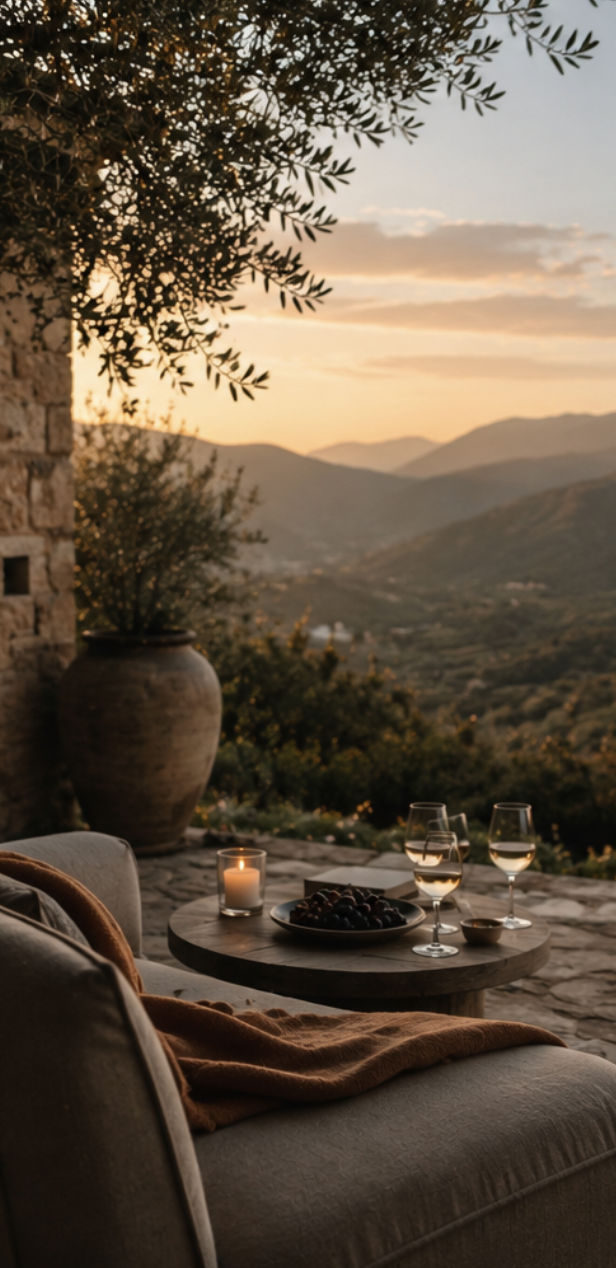
There is luxury in drinking the coffee while it is warm, listening without preparing the next response, sitting long enough to watch evening settle over a room, and allowing pleasure to exist without turning it into something productive. These experiences are available across vastly different circumstances because their value is not primarily monetary. They ask for something that can be even harder to give: attention without hurry.
AUTHENTICITY WITHOUT PERFORMANCE
Authenticity is often reduced to self-expression, but living authentically is more demanding than simply presenting an identity. It requires congruence between what we say matters and how we actually spend our time, money, energy, and attention. A person who values family but gives every available hour to work eventually encounters that contradiction, just as someone who values creativity but never protects time to create must eventually decide which value is truly governing the life. Authenticity becomes visible in patterns long before it becomes visible in declarations.
This can make an intentional life surprisingly difficult because meaningful choices sometimes disappoint people. Boundaries can be misread as withdrawal, contentment as lack of ambition, privacy as invisibility, and changing direction as failure. Yet a life designed primarily to remain legible to everyone else can become a performance from which there is no intermission. True refinement lies partly in becoming comfortable with the fact that a life can be right without being universally understood.
The goal is not relentless self-focus. An authentic life still makes room for sacrifice, responsibility, compromise, generosity, and the obligations that accompany loving other people. The difference is that these things are entered consciously rather than performed automatically, allowing devotion to remain devotion instead of quietly becoming resentment. Living intentionally means knowing why we say yes, and understanding when a thoughtful no protects something essential.
WHAT MAKES A LIFE RICH
The richness of a life is often clearest in the things that cannot be displayed. It is trust built slowly between people, competence earned through years of practice, the ease of being known without explanation, the feeling of returning to a place that has become home, and the private satisfaction of doing something well when nobody is applauding. These forms of wealth deepen through attention rather than acquisition. They are rarely impressive at first glance, but they are often what people describe when asked what mattered most.
Beauty belongs here too. A considered life need not reject beautiful rooms, extraordinary art, excellent food, elegant objects, or the pleasure of refinement; it simply places them in proportion. Beauty becomes richer when it supports living rather than substituting for it, when the table is beautiful because people gather around it, the chair because someone reads there, the artwork because it continues to move the person who chose it. Luxury at its best heightens experience rather than becoming the experience itself.
Meaning is similarly personal. For one person it may be raising children, for another building a company, making art, caring for family, studying the natural world, teaching, creating a peaceful home, writing books, serving a community, or living quietly with integrity. There is no universal architecture for a good life. The art lies in discovering which arrangement of love, work, responsibility, beauty, purpose, and rest makes a particular life feel whole.
THE LIFE ALREADY HERE
We are encouraged to imagine that our real life will begin after the next milestone, when finances improve, work settles, the children grow, the house is finished, the body changes, the schedule clears, or circumstances finally become easier. Some hopes require patience, and some seasons genuinely demand endurance, but postponement can become a habit disguised as preparation. Years can pass while we wait for conditions worthy of our full participation. Intentional living asks us to begin wherever we actually are.
That may mean making the apartment feel like home rather than waiting for the dream house, taking the walk instead of waiting for the perfect vacation, calling the person now rather than assuming there will be more time, or protecting a small corner of the week for the work that makes us feel most alive. These choices do not deny ambition; they prevent ambition from consuming the present. A meaningful life is often built through modest acts repeated faithfully rather than through one spectacular transformation.
Perhaps this is the central idea behind The Art of Life: life is not merely something to improve, display, or eventually master. It is something to inhabit. The finest version of it may be grand or quiet, public or private, abundant or simple, but it becomes beautiful when it is lived with honesty, attention, gratitude, and enough courage to belong to the person living it. That is the luxury no one else can define for us, and the one most worth protecting.