
MONICA LOFSTROM: THE LEGACY INTERVIEW
After years spent creating a platform for other voices, Monica Lofstrom turns toward the work that has been quietly asking for more of her all along: literature, poetry, and a creative life shaped on her own terms.
By EGW Luxury Magazine | The Legacy Issue
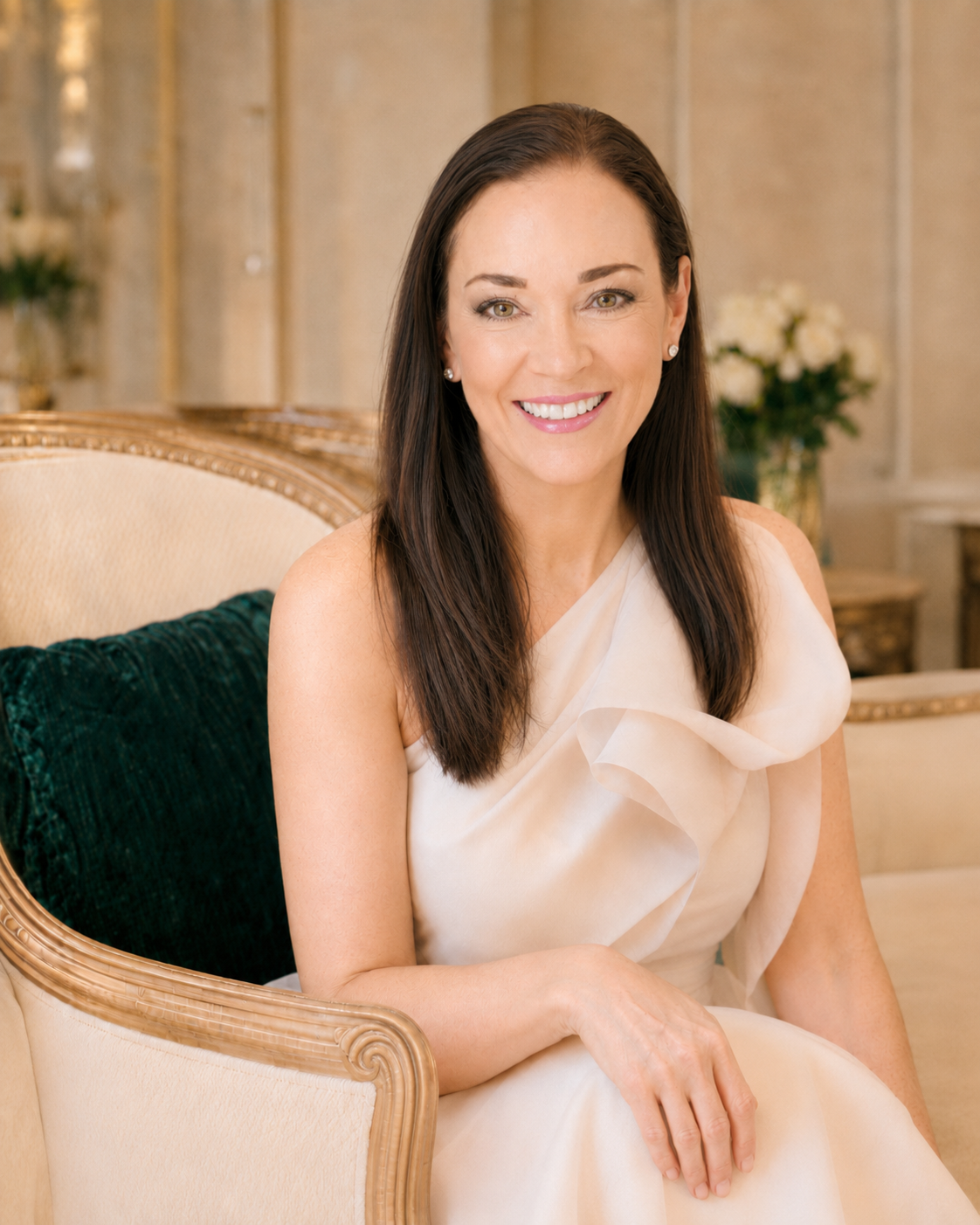
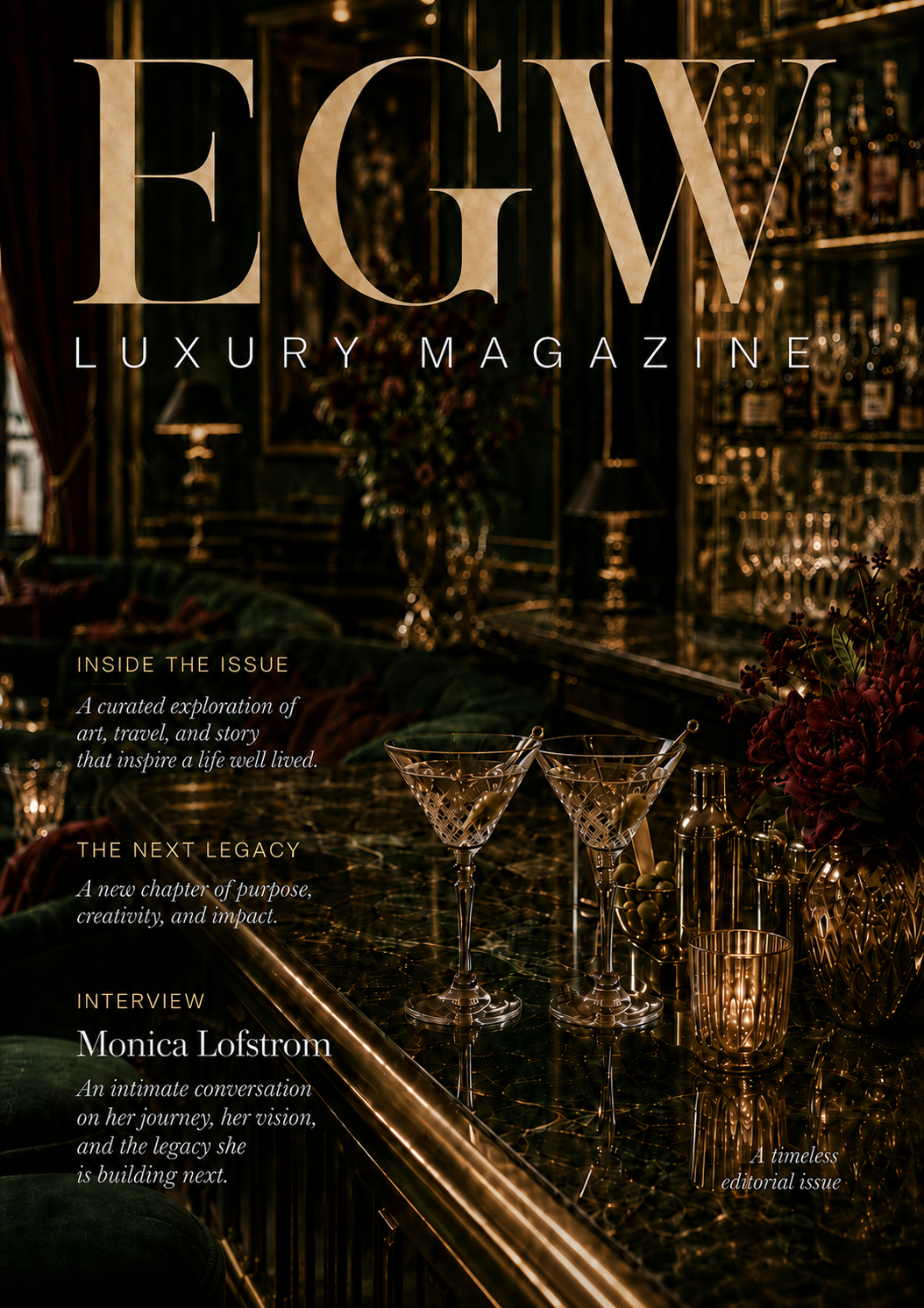
For years, Monica Lofstrom was most visible through the stories she chose to tell about other people. As the founder and Global Editorial Director of EGW Luxury Magazine, she built a publication around conversation, beauty, ideas, extraordinary places, and the people behind them, conducting hundreds of interviews while developing an editorial identity that reached readers around the world. Yet beneath the pace of publishing, commissioning, editing, interviewing, and creating, another body of work was steadily becoming more important: her own.
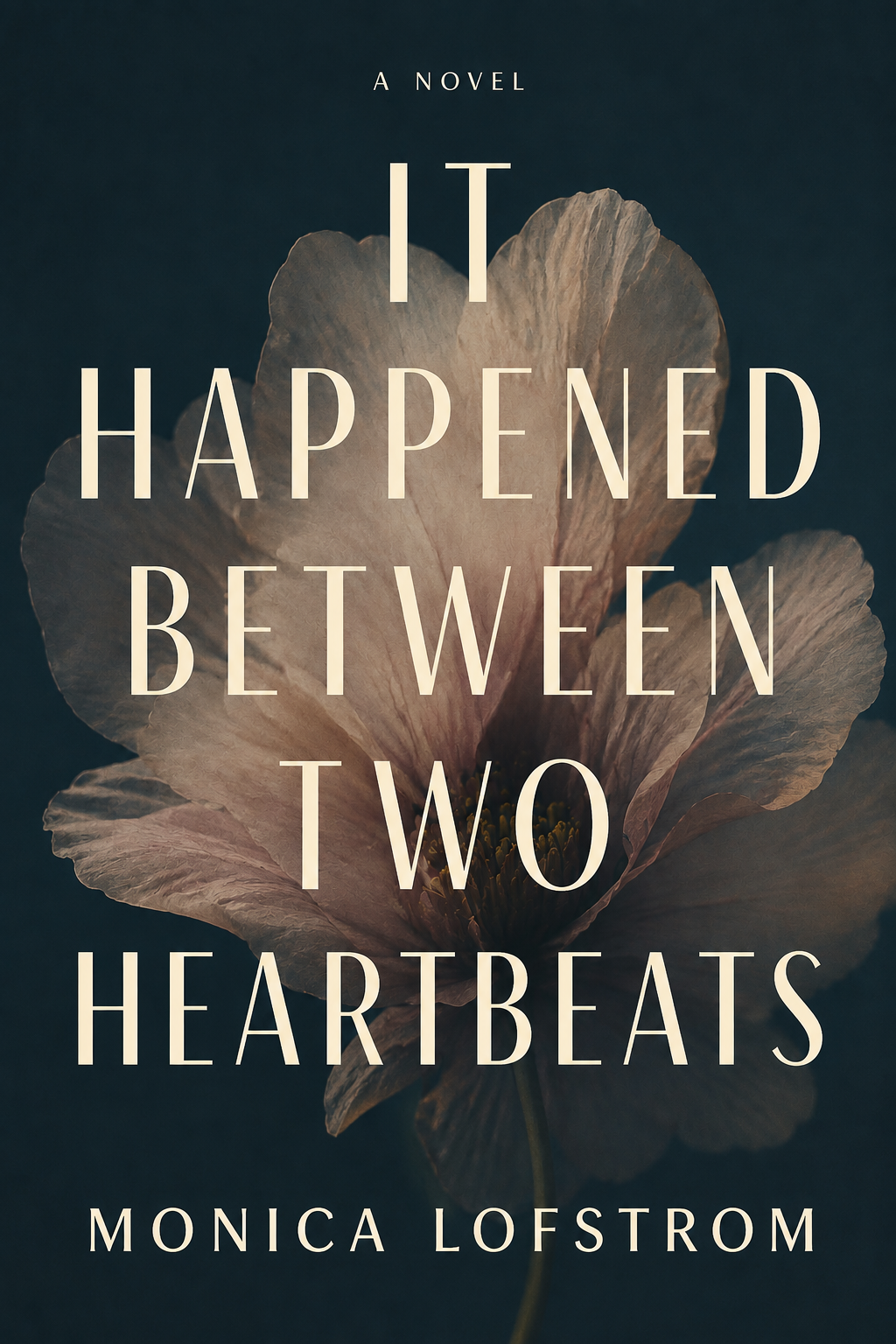
Today, that work is moving to the center. Lofstrom is entering a chapter increasingly defined by fiction, poetry, essays, and a more intimate understanding of what creativity can look like when it is no longer required to justify itself through constant output. Her forthcoming novel, It Happened Between Two Heartbeats, arrives within that transition—a story of love, grief, memory, and the strange endurance of devotion after loss. It is also part of a larger shift in which the woman who spent years building places for other people’s stories is finally allowing herself to inhabit her own.
“I don’t feel as though I am becoming someone new. I feel as though I am finally giving the writer in me the room she has been asking for.”
WHEN THE WORK CHANGES SHAPE
EGW: You have spent years interviewing people, building a magazine, creating editorial worlds, and giving other people a platform. What does it feel like to arrive at a moment when your own creative work is becoming the priority?
MONICA LOFSTROM: It feels strangely emotional because I don’t look back at EGW and think, I wish I had done something else. I loved so much of what I built, and I am incredibly proud of the conversations, the people, and the body of work that came from those years. But there is also a point when you realize that something can have been deeply meaningful and still no longer be the place where all of your energy belongs.
What I feel now is less like walking away and more like returning. I have always written. I have always thought in stories and images and sentences, but for a very long time my best creative hours went toward building something larger than myself. Now I want those hours back for the books, the poetry, and the work that only I can write.
EGW: Was there a particular moment when you recognized that shift?
MONICA LOFSTROM: I think it happened gradually, and then all at once. Every time I sat down to work on the mechanics of the magazine, there was a part of my creative self that felt smaller because I knew there were books waiting for me. I would finish something beautiful for EGW and still feel this pull toward the manuscript on my desk, the poem I had started, or the story that had been living in my head all day.
Eventually, I had to listen to that feeling instead of continually overriding it. There is a difference between being capable of doing something and being called to keep doing it. I know how to run a publication. I know how to interview, edit, produce, organize, and build. The more important question became whether that was still where I wanted to place the deepest part of myself.
THE COURAGE TO COMPLETE A CHAPTER
EGW: People often speak about reinvention as if it requires rejecting the person you were before. Do you see this as reinvention?
MONICA LOFSTROM: Not really. I think reinvention can sometimes sound as though the previous version of your life was somehow wrong, and I don’t believe that. Every version of me brought something important to the next one.
My corporate career taught me how to lead, how to make decisions, how to work under pressure, and how to understand people. EGW taught me how to listen, how to recognize a story, how to trust my visual instincts, and how to communicate with people from incredibly different worlds. Writing has gathered all of those versions of me together.
I think what I am doing now is allowing the pieces to finally belong to the same life.
EGW: Is there grief in allowing a successful chapter to become complete?
MONICA LOFSTROM: Yes, absolutely. I think we sometimes underestimate the grief involved in outgrowing something we once loved. It would almost be easier if you hated the thing you were leaving, because then the decision would be obvious.
But there can be love and gratitude and exhaustion in the same room. There can be pride in what you created and still be an understanding that continuing to carry it in the same way would cost too much of what you want to become. I have learned that honoring something does not always mean keeping it exactly as it was.
“There can be love and gratitude and exhaustion in the same room. Honoring something does not always mean keeping it exactly as it was.”
THE WRITER WHO WAS ALWAYS THERE
EGW: You have described writing as the work you now want to protect most fiercely. What has changed in the way you see yourself as a writer?
MONICA LOFSTROM: I stopped treating writing like something I was allowed to do only after everything else was finished. That was probably the biggest change. For years, my creative work received whatever hours were left over after business, family, obligations, deadlines, and everyone else’s needs.
At some point I realized that if writing mattered as much to me as I said it did, I had to give it something better than the leftovers of my day. I had to make it the work rather than the reward for finishing the work. That shift has changed everything for me because it means I am no longer waiting for permission to take my own creative life seriously.
EGW: Your writing moves between novels, poetry, essays, and very emotionally intimate work. What are you most interested in exploring now?
MONICA LOFSTROM: The things people carry but don’t always know how to say. Love, grief, desire, memory, the lives we almost lived, the people we continue loving after they are gone, and the strange moments when we realize we have become someone different without noticing exactly when it happened.
I am much less interested in explaining emotion than I am in creating enough space for readers to feel it. I want a sentence to stay with someone after the page is closed. I want people to recognize something of themselves in a character even when their lives look nothing alike.
That is probably why poetry has become so important to me as well. Poetry teaches you how little language you sometimes need when the emotion underneath it is true.
BETWEEN TWO HEARTBEATS
EGW: Your forthcoming novel, It Happened Between Two Heartbeats, feels especially connected to that philosophy. What can you tell us about the story?
MONICA LOFSTROM: At its heart, it is a love story shaped by loss. It asks what happens to love when the person we built that love around is no longer physically here, and whether something as powerful as devotion simply ends because a life does.
The story follows Amelia and Julian, but I think underneath their relationship is a much more universal question about memory. When someone dies, our relationship with them does not disappear at the same moment their body does. We continue talking to them in our heads. We remember their gestures. We hear their voice in certain rooms. We carry an enormous amount of love that suddenly has nowhere physical to go.
That idea has stayed with me for a long time: what do we do with all the love that remains?
EGW: The title itself feels almost like a line of poetry. Where did It Happened Between Two Heartbeats come from?
MONICA LOFSTROM: I wanted the title to contain both intimacy and impermanence. So much can happen in the smallest interval of a life. A decision, a touch, a loss, a recognition—sometimes everything changes in a space so small we almost cannot name it.
There is also something about a heartbeat that immediately makes us conscious of being alive, and therefore conscious that life is finite. Love exists inside that contradiction. We know nothing lasts forever, and yet while we are loving someone, it can feel eternal.
That tension became the emotional language of the book.
WRITING LOVE AFTER LOSS
EGW: Grief is an enormous presence in the novel. How do you write about loss without allowing the darkness to consume the love story?
MONICA LOFSTROM: By remembering that grief exists because love existed first. I don’t see them as separate emotions. The magnitude of one often reveals the magnitude of the other.
When I write grief, I am actually writing about attachment, memory, devotion, absence, and the impossible desire to reach across something we cannot change. That can be devastating, but it can also be extraordinarily beautiful because it tells us that another person mattered enough to permanently alter us.
I don’t want the book simply to make someone sad. I want it to make someone remember what it means to love another human being so deeply that their existence changes the architecture of your own life.
WHAT SUCCESS LOOKS LIKE NOW
EGW: After a career that has included executive leadership, publishing, interviewing, entrepreneurship, and now authorship, has your definition of success changed?
MONICA LOFSTROM: Completely. Earlier in my life, success often meant building something measurable. Growth, reach, recognition, titles, the next accomplishment. I understood how to achieve those things, and for a long time they were enormously satisfying.
Now I think much more about ownership of my time. I think about whether the work I am doing feels like mine. I think about whether I still recognize myself inside the life I have built.
Success today is being able to wake up and give my best creative hours to the work that matters most to me. It is finishing a book I am proud of. It is writing something that moves another person. It is having enough room in my life to notice the people I love and the ordinary moments I once might have hurried past.
That sounds quieter than the way I once defined success, but it feels much larger.
EGW: What are you no longer willing to sacrifice for achievement?
MONICA LOFSTROM: Myself.
That took me a long time to understand. Ambition can be beautiful, but there is a version of ambition that continually asks you to prove your worth by how much of yourself you are willing to consume.
I no longer believe exhaustion is evidence that something matters. I want to work deeply, but I also want to live deeply. I want room for books and conversations and mornings and family and art and whatever happens when nobody is asking me to produce anything.
THE NEXT LEGACY
EGW: The Art of Life will continue beyond this issue, and you have begun imagining a new literary and artistic space called The Lounge. What do you want that to become?
MONICA LOFSTROM: Something I can love without it becoming something I have to feed.
That is extremely important to me. I don’t want another content machine. I don’t want categories that need filling or an editorial calendar telling me that I should publish something simply because it has been three weeks.
I want The Lounge to be intentional. Literature, poetry, authors, books, visual art, digital artists, beautiful ideas, and The Art of Life. I want to be able to encounter somebody’s work and think, This is extraordinary. This belongs here.
Then I want to create something beautiful around it.
EGW: So it is not another version of EGW?
MONICA LOFSTROM: No. And that is precisely why I am excited about it.
EGW required me to operate a publication. The Lounge allows me to curate a creative space. Those are very different things.
I want it to feel like entering a room rather than opening a magazine. Maybe there is a new poem waiting there. Maybe an artist. Maybe a conversation with an author. Maybe one of my essays. Maybe nothing changes for several weeks because nothing needed to.
I love the idea that its value comes from intention rather than volume.
“I don’t want to create another place that constantly needs something from me. I want to create a place I can return to whenever I have something beautiful to give.”
WHAT REMAINS
EGW: When you look back across everything you have built, what do you hope remains?
MONICA LOFSTROM: I hope people remember how the work made them feel.
Not the number of issues. Not the number of interviews. Not the reach or the titles or any of the things that once seemed very important on paper. I hope someone remembers an article that introduced them to an artist, a story that made them think differently, or a photograph that made them stop for a moment because it was beautiful.
And personally, I hope my children and the people I love see a woman who kept becoming. Someone who was willing to change her mind, begin again, work hard, create things, fail at things, love deeply, and still remain curious about what might come next.
I don’t think legacy is a finished object anymore. I think it is evidence that we were here and that something moved because of it.
EGW: And what comes next for Monica Lofstrom?
MONICA LOFSTROM: I write.
There are books waiting for me, and for the first time in a very long time, I am not asking them to wait.
It Happened Between Two Heartbeats by Monica Lofstrom is forthcoming. Preorder information will be available through Amazon.
The Art of Life will continue in The Lounge, Monica Lofstrom’s forthcoming literary and creative editorial space devoted to literature, poetry, art, books, digital creativity, and the considered life.
Follow along Monica’s Journey and Next Chapter: @Monicastoryteller author profile: @monicalofstromauthor Website: www.monicalofstrom.com