
INSIDE THE LEGACY ISSUE
A deeply personal final edition of EGW Luxury Magazine turns toward the stories that remain when the noise falls away: creative work, reinvention, the meaning of legacy, and the art of choosing what comes next.
By EGW Luxury Magazine | The Legacy Issue
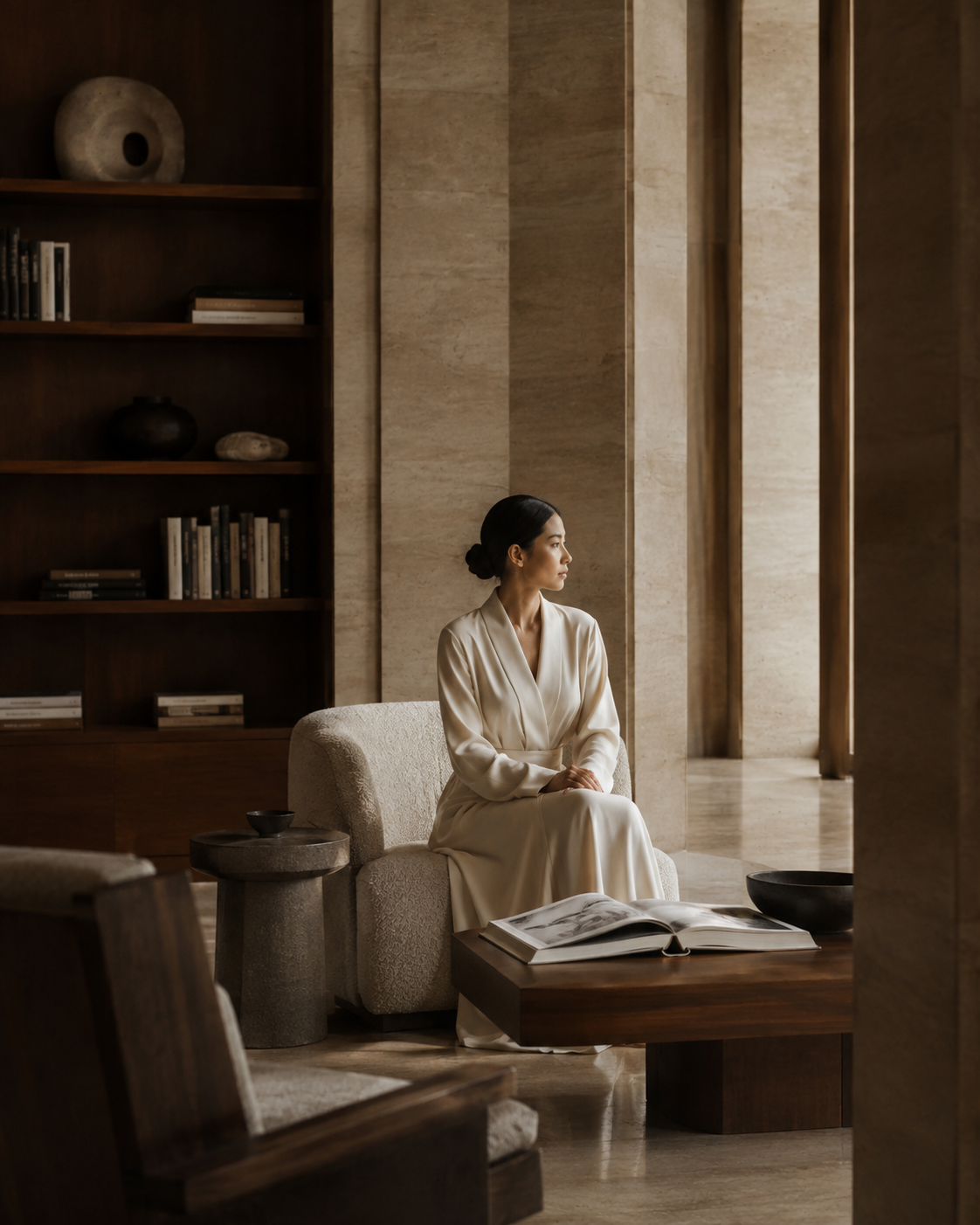
There comes a point in every long creative life when looking forward requires looking back—not with nostalgia, but with clarity. The Legacy Issue arrives at precisely that intersection, bringing together the ideas that have always lived beneath the surface of EGW Luxury Magazine: beauty with meaning, creativity with purpose, and the belief that the way we live matters as much as what we accomplish. Rather than attempting to summarize everything that came before it, this issue turns toward a more intimate question: What do we choose to carry with us when one chapter begins to give way to another?
The answer is not found in a traditional collection of departments or seasonal trends. Instead, The Legacy Issue is intentionally personal, literary, and reflective, built around a small number of stories meant to be read slowly. At its center is a conversation about the life behind the work, the courage required to evolve creatively, and the understanding that legacy is rarely a single achievement preserved unchanged in time. More often, it is something living—reshaped by experience, loss, ambition, beauty, and the person we continue becoming.
“Legacy is not simply what we leave behind. It is what we choose to carry forward, transformed.”
THE LEGACY INTERVIEW
At the heart of the issue is Monica Lofstrom: The Legacy Interview, an intimate conversation with EGW’s founder and longtime Global Editorial Director as she steps into a distinctly different creative chapter. After years spent interviewing and celebrating the work of others, the conversation turns toward her own writing, the evolution of her identity as an artist, and the decision to make literature increasingly central to the life she is building. It is less a retrospective than a portrait of a woman standing between what she has created and what she now feels compelled to create next.
The interview also introduces her forthcoming novel, It Happened Between Two Heartbeats, a deeply emotional work centered on love, loss, memory, and the places where devotion survives even the boundaries of a lifetime. The novel represents more than another publication; it belongs to a larger creative shift toward long-form fiction, poetry, and storytelling that asks readers to feel rather than simply observe. Within the conversation, Monica reflects on what it means to finally give her own work the time once reserved for building platforms for everyone else.
That distinction gives the interview its emotional center. Reinvention is often described as becoming someone entirely new, yet the more interesting transformation may be the opposite: removing everything that has accumulated around us until we can recognize the person who was there from the beginning. The Legacy Interview considers that possibility through writing, identity, ambition, and the decision to allow a successful chapter to become complete without diminishing what it meant.
THE ART OF LIFE
Some things, however, are not ending. The Art of Life, Monica Lofstrom’s signature column, remains one of the clearest expressions of the philosophy that has gradually come to define the publication itself. It is where beauty has always been allowed to mean more than acquisition, where a beautiful home can begin with the way morning light enters a room, and where refinement can be found in what we notice, what we protect, and how deliberately we inhabit our days.
Within The Legacy Issue, the column becomes both continuation and bridge. Its central ideas—living thoughtfully, cultivating beauty without excess, remaining curious, making room for art and literature, and understanding that a meaningful life is composed largely of ordinary moments—will continue beyond the traditional magazine format. The column is not being preserved because of obligation or history; it is continuing because its questions remain unfinished.
That future will ultimately lead into The Lounge, a more intimate literary and creative expression shaped around writing, poetry, books, visual art, digital creativity, and the considered life. The Art of Life belongs naturally there, freed from the demands of conventional magazine publishing and able to appear whenever there is something meaningful to say. Its continuation offers a subtle reminder that moving forward does not require abandoning everything behind us; sometimes the most important parts simply require a new place to live.
THE WORK OF A LIFETIME
Legacy itself becomes the subject of another feature in this issue, moving beyond any one person or publication to consider the larger architecture of a life’s work. We are often encouraged to imagine legacy as singular: the company built, the title earned, the book written, the fortune created, the family raised, the masterpiece completed. Yet few meaningful lives follow such a clean line, and perhaps they were never meant to.
A life can contain multiple bodies of work. The young person pursuing one ambition may eventually become the parent, entrepreneur, artist, mentor, writer, caretaker, traveler, or quiet observer they could never have imagined becoming decades earlier. Achievements that once seemed definitive may later become foundations for entirely different forms of expression, while experiences that appeared to have nothing to do with our “work” may ultimately shape it most profoundly.
The feature asks readers to reconsider the idea that changing direction somehow invalidates what came before. A career can have mattered deeply without needing to last forever, just as a dream can evolve without becoming a failure. The things we build may change form repeatedly over a lifetime, but the qualities beneath them—curiosity, courage, discipline, imagination, generosity, resilience—often remain remarkably constant.
WHAT REMAINS
That is the deeper thread connecting everything inside The Legacy Issue. It is not a farewell built around endings, nor is it an attempt to place a neat conclusion around years of creative work. It is an examination of what remains when titles loosen, projects change, priorities sharpen, and the person behind the work finally has enough distance to ask which parts still feel alive.
The answer may be surprisingly simple. Stories remain. Art remains. The conversations that changed us remain, as do the people we loved, the risks we took, the sentences we wrote, and the moments that quietly altered the direction of our lives. Legacy is not a static collection of accomplishments; it is the continuation of influence, memory, creation, and possibility.
For EGW Luxury Magazine, The Legacy Issue is therefore less interested in preserving a particular version of the past than in honoring what the past made possible. It holds space for a new novel, an enduring column, a new creative destination, and a larger conversation about the work we leave behind and the work still waiting for us. There is beauty in knowing when something has fulfilled its purpose, but there may be even greater beauty in discovering that its most meaningful elements were never dependent upon its original form.
Perhaps that is the final invitation of The Legacy Issue: to look at our own lives not as a series of closed chapters, but as a body of work still being written.