
HEIRLOOM SPACES: THE BEAUTY OF LIVING INSIDE MEMORY
EGW LUXURY MAGAZINE | WINTER 2025
FEATURE | THE ART OF LIFE
There are homes that feel lived in. And then, there are homes that feel remembered. You know them the moment you enter—not by the way they look, but by the way they hold you. There’s a softness in the air, a hush that settles on the skin like silk. You sense it in the worn edges of a banister, the slant of afternoon light across a time-stained floorboard, the quiet reverence with which objects seem to rest in their places.
These are not just rooms. They are heirloom spaces. Not curated for perfection, but kept with care. They do not shout to be seen. They whisper. They beckon. They remember.
In a world obsessed with reinvention, heirloom spaces remain steadfast. They carry the echo of what has mattered most—not in grand gestures, but in the soft weight of continuity. They are not designed for display, but for devotion. Not styled for trends, but shaped by time.
A chest that creaks when opened, still holding the scent of cedar. A curtain stitched by a mother’s hands, its edge now frayed by decades of sun. A kitchen wall marked faintly by the growth of children—names and years penciled in crooked lines, too sacred to paint over. These are not artifacts. They are living things.
In a Parisian apartment tucked beneath the eaves of the Marais, five generations have come and gone. Its walls wear every season they’ve known—flaked paint in the corners, a patched tile near the hearth, and a phonograph that still sings Édith Piaf on Sunday mornings. When the great-granddaughter moved in last year, she chose not to renovate. She rearranged. “I didn’t want to change its voice,” she said. “I wanted to live inside its story.”
That is what heirloom spaces ask of us: not reinvention, but relationship. To step into these rooms is to enter a dialogue—with those who came before, with the passage of time, with the quiet dignity of things that endure.
Heirloom does not mean antique. It means kept with care. It means a bench carved by a grandfather’s hand. It means a mirror that once reflected your mother’s smile, now catching your own. It means shelves lined with books that smell like childhood summers and underlined thoughts that still make you pause.
In Kyoto, there is a ryokan that has welcomed travelers since 1802. The rooms are spare—tatami mats, paper walls, a single vase holding plum blossoms. At first glance, it seems almost empty. But step inside, and you feel it: the weight of centuries held in balance. Nothing is loud. Nothing is new. Everything matters. Even the silence feels inherited.
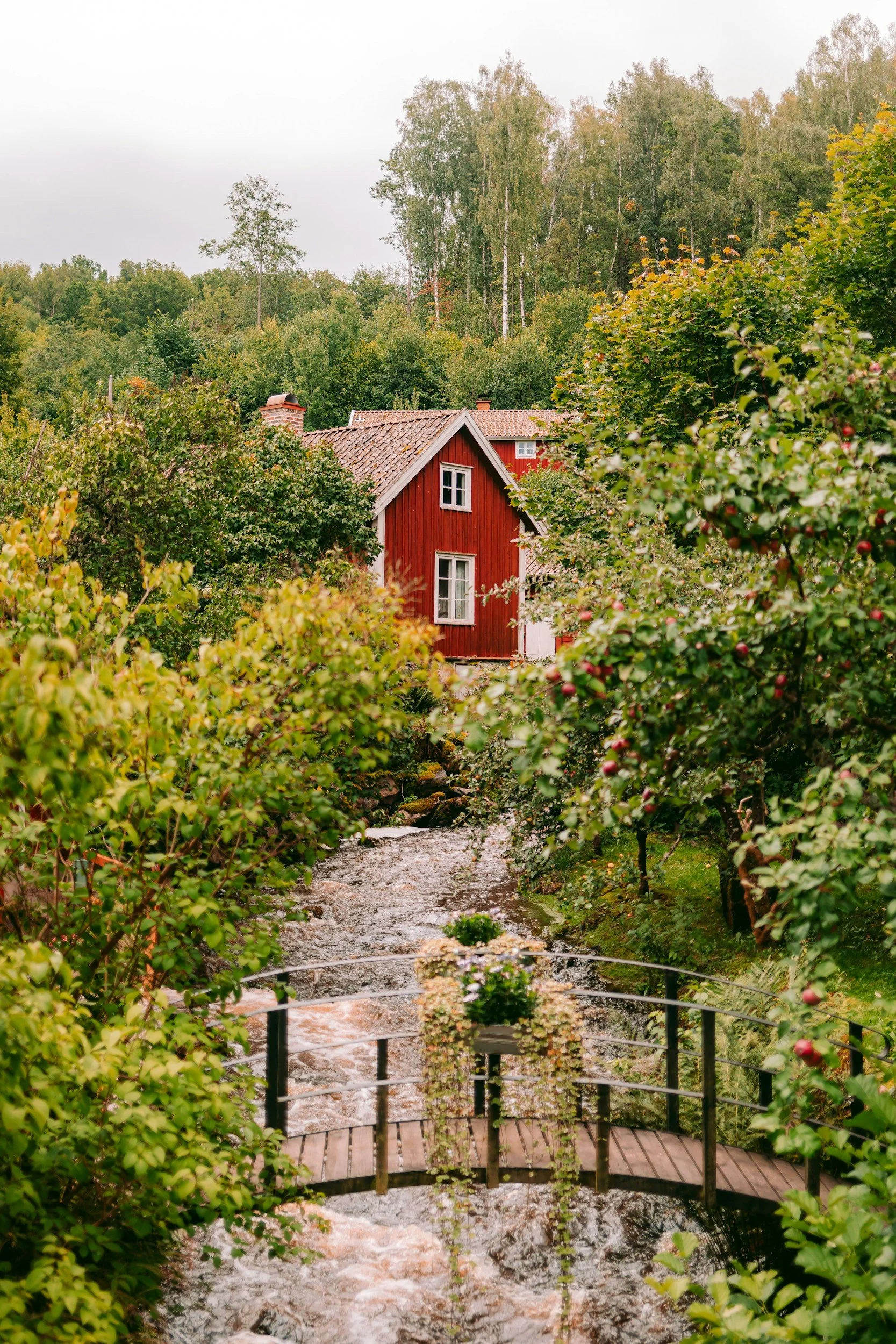
In the American South, wraparound porches continue to echo with stories told in the hush of dusk—rocking chairs, pitchers of sweet tea, voices lifted between thunderclaps. In Stockholm, kitchens glimmer with copper pans that belonged to someone’s great-aunt, and wool blankets drape beds like quiet sentinels. These things are not decorative. They are devotional. They are memory made tactile.
To live in an heirloom space is to choose not convenience, but continuity. Not flash, but feeling. It is to ask not, What does this say about me? But rather, What does it still hold that I’ve forgotten how to hear?
Because heirloom spaces do not advertise themselves. They reveal themselves. Slowly. In time. In presence.
The way the light lands at 4 p.m. on a stack of letters tied with ribbon. The way a chair fits your body as though it remembers you. The way the room holds a silence that feels like prayer.
These are not rooms built for performance. They are vessels for becoming. You do not decorate them. You dwell within them. And they, in turn, dwell within you.
Because some spaces do not just contain life. They witness it. And in doing so, they become sacred.
An heirloom space is a room that does not forget. It holds your laughter, your weeping, your unfinished thoughts, your hopes spoken into the quiet. And if you sit long enough… if you slow down and listen to the light, you may just hear your own story told back to you—in the language of wool, wood, breath, and time.